Top Athlete
Ecommerce SEO Case Study
Want similar results? Enter your details for a free consultation
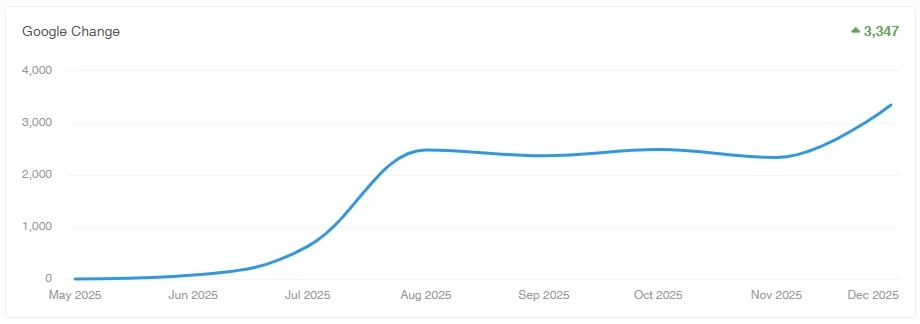
3,347
Google Rankings Improved
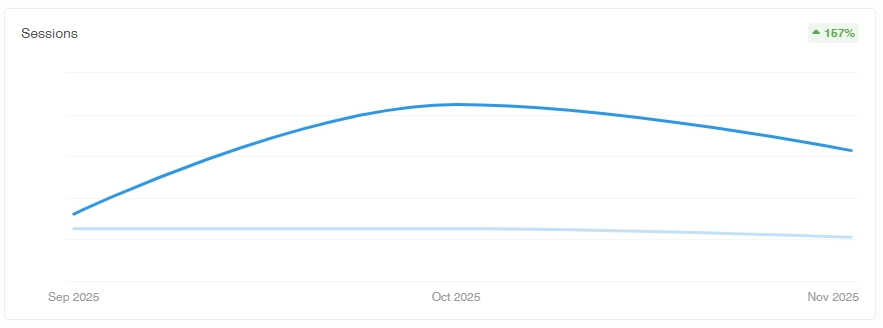
152%
Increase In Organic Traffic
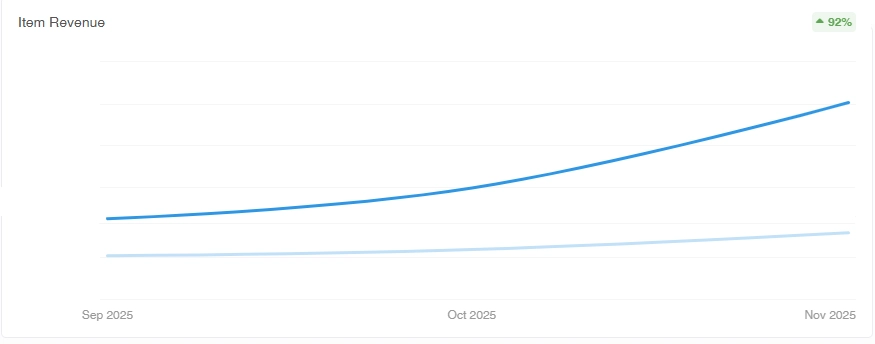
92%
Increase In Organic Revenue

About Top Ahtlete
Top Athlete is a supplement store for people who are looking to improve their performance and recovery from work outs and also for everyday health and wellness. They are based in Melbourne but ship their products Australia wide.
The Problem
- Revenue stagnant and not increasing.
- Not coming up for local search even though they have a store.
- Lazy and questionable SEO practices on their website from previous agency.
The Results
- 3 months of SEO completed in the first month.
- Big increases in rankings and orders.
- Coming up for many highly competitive search terms.
Amazing Results!
Top Athlete has been around for a few years and as an Australian brand, we reached out to them and even visited them as we noticed they are doing well, but had some good stratergies to even better their results.
We startd to fix up the AI content on their website (ongoing), bad schema code installed from their previous agnecy and also made sure they were coming up for local search. We also looked into some highly searched competitive based words to make sure they are coming up for products people are looking for all the time. Apart from the massive increase in orders and revenue, some of the rankings we have ahcieved for some of the industries most competitive terms are (as of 18 December 2025)
eaa electrolytes: position 1
lean whey: position 2
supplement shop: position 3
hydrolysed collagen: top 5
lean whey protein: page 1
Rankings Increase
Traffic Increase
Revenue Increase
How Top Athlete Lifted Organic Revenue 92% After We Cleaned Up Schema Spam and Cannibalisation
Top Athlete did not need another fluffy agency write-up. They needed someone to rip out a prior Melbourne agency’s mess, put the right commercial keywords on the right Shopify URLs, and prove organic could move revenue without ads carrying the story. If your Shopify store “had SEO done” and revenue still feels stuck, this will feel familiar.
Top Athlete sells supplements for training, recovery, and everyday wellness. Proteins. Electrolytes. Collagen. That lane. Australian owned energy, Melbourne base, national shipping, Shopify cart. You get the drift by now. We (well Deniz, our SEO saviour), loved the brand – Australian grass fed beef, third party tested, compared better against Gold Standard brand. So he walked into the store, picked up some products and hussled Tony at Top Athlete for a meeting as there were a few things on the website that needed attentioned asap.
They were not a broken brand. Products were solid. Reviews were real. People already bought. The growth line just was not moving the way it should for a catalogue that strong.
Search had three jobs:
- Win non-brand product and category queries where intent is hot.
- Hold brand demand so marketplaces and copycats do not steal ready buyers.
- Show up locally as well, because there is a real store footprint, not only a warehouse fantasy.
Before we started, job one was leaking. Job two was soft. Job three was almost non existent thanks to the previous agency.
The mess from the previous SEO Company
The short case study already lists the obvious stuff:
- Revenue stagnant
- Weak local visibility despite a store
- Questionable SEO left behind by the previous agency
Fine. True. Not enough detail if you want to learn anything.
Here is the operator version.
A well known Melbourne SEO company that only spealises in SEO (they have no clue) had been on the account. Our view is blunt and we will keep it blunt: some shops look great at ranking their own site and get sloppy on client builds. What we found matched that pattern.
Keyword targeting was lazy.
Pages were not cleanly owned. You could not point to a URL and say “this one wins lean whey” or “this one wins the shop style term” without wincing. Fuzzy targeting is how you stay forever on page two. The homepage, for example, was targeting random keywords that belonged to product pages which is why they were barely coming up in the local market.
Cannibalisation was baked in.
Collections, products, and content overlapped. Same intent, multiple URLs half trying. Google does not reward indecision. It splits signals, then gives the click to a competitor who made a choice.
Schema was not “missing.” It was wrong.
This part is annoying, and the previous company should be sued (not really, but it was appalling). They had a massive general FAQ living in schema, and they were careless enough to push related junk through the header so it spammed across the site. Not one product page with a neat FAQ block. A global mess.
AI content residue sat on the site.
Some of that cleanup is still an ongoing hygiene job. Interchangeable copy makes cannibalisation harder because every page sounds like the same polite robot. Yes, AI can assist but if you simply copy and paste and wipe your hands clean, you are leaving the mess on the website instead.
Why that header FAQ schema stunt is worse than it sounds!
A lot of business owners hear “schema” and switch off. Stay with me for two minutes. This is where the previous work actively hurt them.
Schema is you making a claim to Google. You are saying: this page contains these products, these questions, these answers, this business entity. If the claim is generic and repeated everywhere, you train the system to treat your markup like noise.
Stack that with header injection, and you get a second problem: the same low-value pattern appears on URL after URL. Yes, every single page of the website. Search systems notice repeated blocks. Crawl budget gets wasted. Page uniqueness drops. Your whey page and your collagen page start looking structurally related in all the wrong ways.
FAQ schema that does not match unique visible Q&A is also a rich result quality problem. Best case, nothing special shows. Worst case, trust in your structured data falls, and that distrust can spill over onto the Product and Offer markup you actually need for ecommerce.
Cannibalisation gets louder too. You are not only repeating words. You are repeating structured meaning across the whole template. That makes it harder for Google to pick a single winner for a query cluster.
And once it is global, every new product inherits the disease. Catalogue growth multiplies the mistake.
So when we say we “fixed schema,” we do not mean we sprinkled magic JSON on a blog post. We mean we tore out the global generic FAQ pattern, stopped the header spam, and put page appropriate ecommerce markup back in a way that matched what shoppers actually see.
What we did in the order mattered
Start date: May 2025.
Our numbers at the top of this page show a punchy line about completing three months of SEO in the first month. Translation: we did not drip-feed the painful stuff across a quarter. We compressed the remediation.
On the ground, cleaning the inherited mess took about six weeks. After those issues were addressed, rankings rocketed by about 2,480 positions. The broader headline results (3,347 rankings improved, +152% traffic, +92% organic revenue) stacked up across roughly six months. Work continued after that. SEO is not a one time firework!
1. Keyword research tied to specific pages
We researched keywords for each page we were actually targeting. Not a 5,000-row spreadsheet nobody uses. An actual map!
For every money URL in the set:
- primary query
- supporting modifiers
- cannibalisation check against other live pages
- decision on winner URL type (product vs collection vs content)
- only then rewrite
If you skip this, your content calendar becomes a cannibalisation machine.
2. Full on-page passes (copy, URLs, metadata)
Each target page got a proper optimisation pass. Titles. Metas. Body copy. URL tidy-ups where the slug fought the term. Internal links pointed at winners on purpose.
This is unglamorous SEO services work. It is also where rankings start behaving like they have a boss and are trying to perform the best they can.

3. Schema cleanup in the same sprint
We did not leave the structured data mess “for phase two.” It was part of the same remediation window as the on-page work. Global junk out. Correct page type markup in. Templates checked so a theme edit would not re-poison the header.
4. Outreach
Outreach is boring, but it helped. Links and mentions still matter in competitive supplement SERPs. We did not pretend a pure on-page diet would outmuscle national competitors forever. We also did not do outreach before the URL map made sense. Equity poured into the wrong page is a very expensive.
5. Regular blogs and real help on recipes
We published regular blogs and helped with their recipes section. That is not “content for content’s sake.” Recipes are a natural bridge for a supplement brand if they are useful and if they route internal authority into products people can buy.
Weak AI copy kept getting cleaned as we went. Commercial pages first as always. Now, some of our blog posts, and the past ones we fixed up are our top pages driving organic traffic.

6. Local visibility beside national ecommerce
Top Athlete ship Australia wide and they still needed local presence to stop being invisible for local intent. National ecommerce SEO and local SEO services are not enemies. For a Melbourne based brand with a real footprint, you run both lenses.
The main issue here is that the previous SEO company were targeting terms such as “protein” and “creatine” on the homepage, where there were already collection and product pages for this. We started targeting terms instead that assist people who are looking for a store to visit. As a reuslt, walk ins increased and over the counter sales sky rocketed!
What moved first?
The first six weeks did the messy part. keyword to URL decisions, full page optimisation, schema and header cleanup. That is when rankings surged hard.
After that, outreach, blogs, recipe support, and ongoing content compounded the win into traffic and revenue. People love crediting the blog because they can see posts.
A simple table of our great results for Top Athlete
| Window | What We Focused On | What Moved |
|---|---|---|
| From 1 May 2025 | Research, priorities, page map | Clear target list instead of vibes |
| First ~6 weeks | On-page rewrites, URLs, metadata, schema/header cleanup | Rankings jumped ~2,480 positions |
| Months 2 to 6 | Outreach, blogs, recipes, AI content cleanup | +152% organic traffic, +92% organic revenue, 3,347 rankings improved |
| Later check | Same quarter vs prior year | Organic revenue +217% |
| Ongoing | Keep templates clean, keep content honest | Competitive terms held and ongoing improvements in revenue |
Most recent quaterly revenue vs. same time last year

What Australian ecommerce websites should copy from this
Check your theme before you rewrite or add more products: Open a product page and a collection page. View source. Search for FAQ, JSON-LD, and repeated blocks. If the same blob appears everywhere, fix the template first.
Pick one winner URL per query cluster: Two collections and a blog all “kind of” targeting the same term is how you stay average. Choose. Strengthen. Demote the rest.
Make schema describe reality: Product markup on products. Real FAQs only where shoppers see FAQs. No fantasy Q&A farm in the header.
Treat 100% AI copy & paste like debt on money pages: This should be common sense now but it is not. Stop living in a fantasy that if you think a simply copy and paste will work. It won’t. Rewrite what earns you money.
Force a three month remediation plan out of your agency: If they cannot list template bugs, cannibalisation clusters, and schema errors early, you are paying for activity, not progress.
Report organic revenue: Rankings are useful. Traffic is better. Organic revenue is the best metric. Top Athlete’s story works because the commercial percentages moved and lots of money was made, not because somebody screenshotted one green keyword.
This is what our Shopify SEO optimisation engagements are supposed to look like when a store already has demand and a dirty technical story:
- Map commercial queries to winner URLs.
- Fix template-level schema and on-page debt fast.
- Optimise the winners properly.
- Support with outreach and editorial that serves the catalogue.
- Keep local entity strength alive when the brand has a real city base.
- Report in traffic and revenue movement.
If you are shopping agencies, ask them to explain their last schema disaster repair. If they only talk about “content velocity,” keep walking.
Do you want to sell more online? Of course ou do!
At Digital Debut we offer no lock in contracts and front load 3 months of work into your first month with us.
If you want your business to make more money, see some more of our case studies and then get in contact with us. Let’s make your business more revenue asap!
See what some of our customers are saying
Trustindex verifies that the original source of the review is Google. Deniz does what he says and does not over promise, but he provides real results. Great communication. Highly recommendTrustindex verifies that the original source of the review is Google. The best in SEO. There is no competition. If i could give more than 5 stars i would . Highly highly recommendTrustindex verifies that the original source of the review is Google. Thankyou for SEO management, absolute weapon for growing leads and business. Thankyou again Deniz 😀Trustindex verifies that the original source of the review is Google. Ive been working woth the team at Digital Debut for years, and Deniz is a magician when it comes to SEO!! Thank you for all the help!!Trustindex verifies that the original source of the review is Google. We have been nothing but satisfied by the services Deniz from Digital Debut provides. Timely and professional and nothing is ever a problem. So glad we switched a few years ago!Trustindex verifies that the original source of the review is Google. after many years of lookinf for an SEO expert Deniz came across and I found him Understanding and Practical. From his Analysis and Reporting he gain Trust and Confidence. Thank youTrustindex verifies that the original source of the review is Google. Deniz is really great. Big help with out rankingsTrustindex verifies that the original source of the review is Google. Deniz is simply a man of class and professionalism. True master of his craft, we’d recommend digital debut to anyone focusing on growing their business. Thanks heaps mate.Trustindex verifies that the original source of the review is Google. Digital Debut are my go-to for advice for SEO and campaigns. With their help I've been able to build search engine friendly websites. I cannot recommend them enoughTrustindex verifies that the original source of the review is Google. We refer all our clients to Deniz when asked for SEO. He's advice has helped us build high converting websites for our clients, and ongoing campaigns continue to deliver value to our clients. Deniz is easy to talk to and happy to help.