What Is Link Building & How to do it?
Posted on
- 23 June 2026
How To Get Backlinks For Your Website
If someone told you that other websites linking to yours could double your Google rankings, you would probably want to know more. That is essentially what link building does. It is one of those SEO topics that sounds technical but once you understand the basics, it changes how you think about growing online. Let’s break it down properly.
Table of Contents
The Simple Version of What Link Building Is
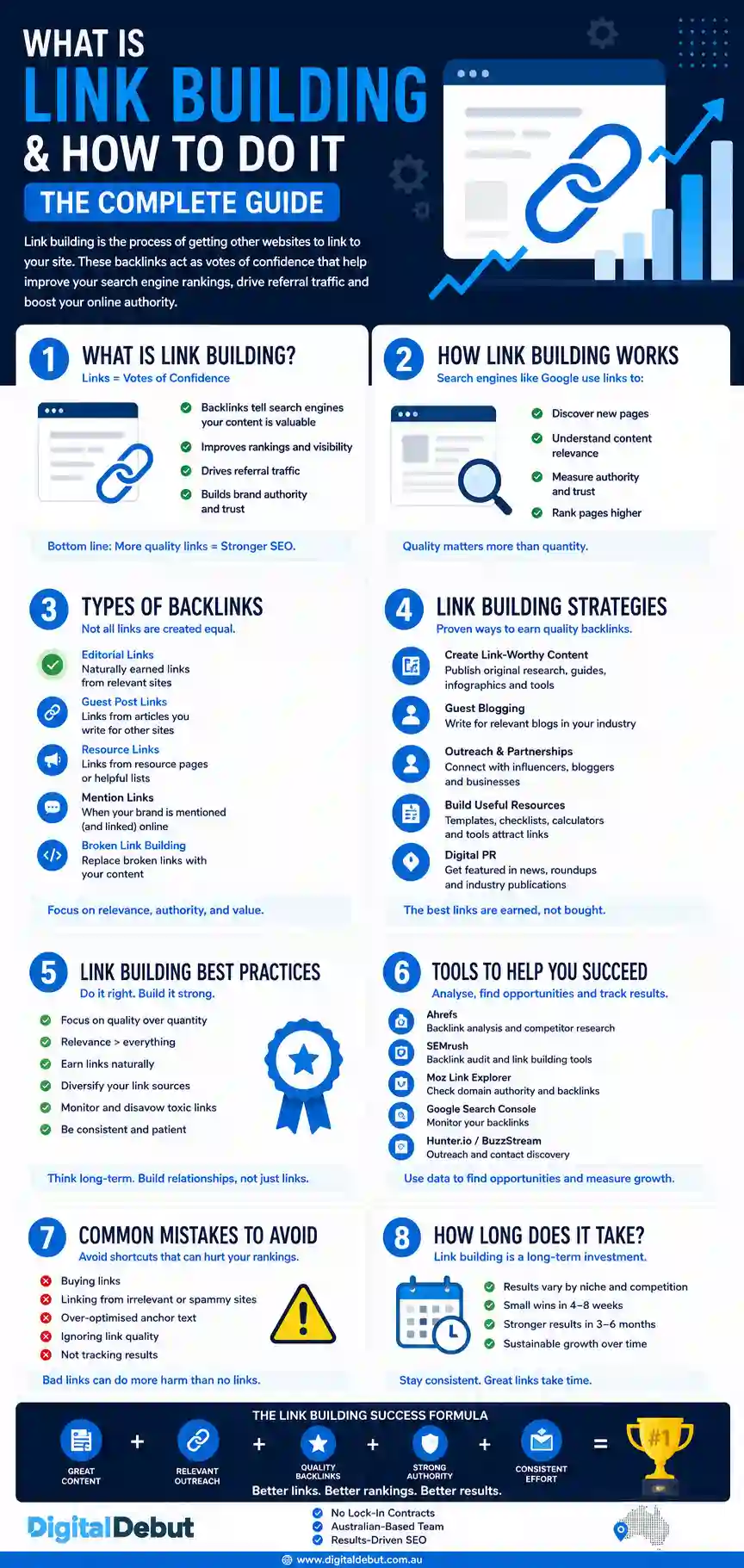
Link building is getting other websites to link back to yours. That is the short answer. Each of those links is called a backlink, and Google uses them to figure out whether your website deserves to be trusted. Kind of like a good word of mouth.
Picture it like this. Your business website is new. Nobody has heard of you. But then a respected industry publication writes about your work and includes a link to your site. Then a local council business directory adds your listing with a link. Then a trade association mentions you in a roundup article.
Google sees all of that. It starts to think your site is worth paying attention to. That trust translates into higher rankings.
Google has used links as a signal since 1998. The way it evaluates them has become far more sophisticated since then, but the core idea has not changed. Links still matter enormously.
Your Rankings Depend on Link Building
Yes, they say content is king, but content alone often is not enough. A beautifully written page targeting a competitive keyword can sit on page four of Google forever if the website behind it has no authority. Links are frequently what tips the scale.
Here is why that happens. When lots of respected websites link to you, Google starts to see your domain as an authority in its space. That authority makes it easier to rank new content faster, compete on tougher keywords, and hold your positions over time.
Without links, even excellent content can be invisible. We write more about this in our piece on how to improve your Google ranking, but the short version is that links and content work as a pair.
Links also bring actual visitors. Someone reading an article that links to your website might click through out of curiosity and become a paying customer. That traffic exists entirely outside of Google and keeps arriving regardless of algorithm updates.
The Types of Links Worth Knowing About
Not all backlinks do the same thing. Understanding the differences helps you spend your energy in the right places.
Dofollow Links: Dofollow is the default. These links pass authority from one site to another. They are what most people mean when they talk about backlinks that move the needle in SEO.
Nofollow Links: Nofollow links have an attribute that tells Google not to pass authority through them. For years people dismissed nofollow links as useless. Google has since updated its position, treating nofollow as a hint rather than an instruction. They still contribute to a natural link profile and drive real referral traffic. If that referring traffic engages with the content of your website, these positive signals help your rankings.
Editorial Links: Someone found your content genuinely useful and decided to link to it without any arrangement or payment. That is an editorial link. These are the most valuable kind because they are a bit more tricky to rank at scale and carry strong trust signals.
Guest Post Links: You write an article for someone else’s website and include a link back to yours in the process. This is one of the most widely used link building strategies and completely legitimate when done on reputable, relevant publications.
Local Citation Links: Business directories, review platforms, and local organisations linking to you. These matter especially for local SEO for tradies and other industries such as hospitality . A listing on True Local or Yellow Pages might not be glamorous, but it reinforces your business’s legitimacy and location data for Google.
What Makes a Link Valuable?
A thousand links from random, low-quality sites can actually damage your rankings. Some experts say toxic backlinks are ignored, but enough of them, can actually hurt your business’ reputation. A handful of links from the right places can transform them. Here is what separates useful links from harmful ones.
Relevance: A link from a website in your industry carries more weight than a link from something completely unrelated. If you are an accountant in Brisbane and you get a backlink from an Australian small business publication, that is relevant and valuable. A link from a recipe blog is not going to do much for your financial services rankings.
Site Authority: A mention from a major Australian news outlet is worth substantially more than 100 mentions from obscure blogs. High-authority sites pass more trust. That is just how Google’s model works.
Anchor Text: The clickable words in a link are called anchor text. When anchor text includes relevant keywords, it adds a relevance signal. However, repeating the exact same keyword phrase across all your links looks manipulative. A natural mix of branded, partial-match, and generic text is what a real backlink profile looks like.
Where the Link Appears: A link sitting inside the main body of an article carries more weight than one buried in a footer or sidebar. Contextual, in-body links are what you are really after. They tell Google the link is genuinely relevant to the surrounding content.
Link Diversity: Fifty links from a single domain are far less valuable than fifty links from fifty different domains. A diverse backlink profile from a range of sources looks natural. A concentrated profile from one source raises flags.
Link Building Strategies That Work for Your Businesses
There is no single magic method here. The most effective link builders use a mix of strategies depending on their industry, location, and goals.
Create Content That People Actually Want to Link To: This is the hardest strategy to execute but the most durable. Original research, comprehensive guides, local data, useful tools, and well-sourced articles attract links organically over time. If you create the best resource on a specific topic in your industry, other websites will reference it.
We explore this in our guide on top SEO tips for your website but the principle applies equally to link building: give the internet a reason to talk about you.
Guest Posting: Reach out to reputable industry blogs and publications and offer to write something genuinely useful for their audience. In exchange, you include a link back to your site. The key word there is reputable. A guest post on a site that exists purely to sell links is a liability, not an asset.
Digital PR: Getting your business covered in news articles and online features generates some of the best backlinks available. This could mean commenting as an expert source for a journalist, distributing a press release about a business milestone, or contributing data to an industry report.
Broken Link Building: Find links on other websites that point to pages that no longer exist. Suggest your own relevant content as a replacement. The site owner gets a fix to a problem they probably did not know they had. You get a backlink. Both parties win.
Local Directories and Organisations: Australian-specific directories, local councils, chamber of commerce listings, and state-based industry associations are all valuable sources of locally-relevant links. These matter particularly for businesses targeting suburb or city-level searches. They reinforce the geographic relevance signals that drive local pack rankings.
If ranking in local searches is a priority, this ties directly into your broader local SEO services strategy.
Claiming Unlinked Brand Mentions: Sometimes websites mention your business without linking to you. Set up a Google Alert for your business name and check periodically whether any recent mentions are missing a link. A polite email asking whether they would add one has a surprisingly good conversion rate because they already know who you are.
Link Building Tactics to Avoid
Australian businesses competing for local keywords benefit from a different emphasis in their link building strategy. Links from Australian websites signal geographic relevance more strongly than international links for local searches.
A link from your local council’s business directory, a regional newspaper, or a state-based trade body sends clear signals to Google about where your business operates and who it serves. If you are a plumber in Adelaide, a link from an Adelaide community publication is worth more for your local rankings than a link from a generic US-based business blog.
This local relevance dimension is worth understanding in combination with what Google Maps rankings actually require. Our post on how to rank on Google Maps covers the local SEO factors in more detail.
Link Building for Local SEO
You do not necessarily need a professional to identify on-page issues. Here is a practical starting point.
Set Up Google Search Console: Google Search Console is free and shows you which search queries are bringing users to your site, which pages are getting impressions but not clicks (a title or meta description problem), and any issues Google has flagged with crawling or indexing. It is the single most useful tool available for on-page SEO intelligence. Note: Google Search Console is not that accurate, but it helps you understand your content a bit better.
Use a Crawl Tool: Tools like Screaming Frog (free for sites under 500 URLs) will scan your entire website and flag missing title tags, duplicate content, broken internal links, pages with no alt text, and dozens of other common issues. Running a crawl once every quarter gives you an ongoing picture of your site’s on-page health.
Manual Page Checks: For smaller sites, nothing beats going through each page one by one. Look for: a unique title tag with the page’s keyword, a unique meta description, a single H1 heading, a logical heading structure below that, enough content to genuinely answer the page’s topic, at least two internal links to related pages, images with descriptive alt text, and a clear call to action.
It is worth understanding how long SEO really takes before you start so your expectations are grounded. On-page changes typically become visible in rankings within four to twelve weeks, depending on your site’s history and how often Google crawls your pages.
How Long Before You See Results From Link Building?
Honest answer, it takes time. New backlinks generally need weeks to months before Google fully incorporates them into your rankings. The actual timeline depends on how quickly Google crawls the linking site, how authoritative it is, and how competitive your target keywords are, but then it will all start to snowball and the results will keep getting better!
For businesses in moderately competitive niches, a consistent six-to-twelve-month link building effort typically produces meaningful movement. Highly competitive national markets require longer. This fits the broader truth about SEO timelines, which our post on how long SEO really takes addresses in depth.
The upside is that links compound. Authority you build this year continues working for you two years from now. Businesses that invest consistently over time build profiles that competitors cannot easily replicate on a short timeline.
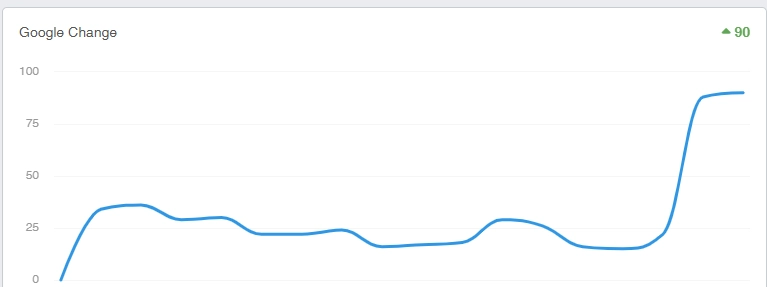
Below are the rankings of a client who took a break from their SEO. They did not lose rankings right away, but you can see it was a bit of a slow burn over nearly 1 year. Their content was on point, so we did not need to change much apart from regular blogging paired with consistent and relevant back links over 4 months before they shot back up. Consistent link building with good SEO does take a bit of time, but once it builds up the results speak for themselves.
Link Building Does Not Work Alone
The best backlink profile in the world will not rescue a technically broken website or a website with poor content. Before link building can reach its full potential, your site needs solid foundations: fast load times which can be dependent of your website hosting, clean code, crawlable structure, and no content issues. Make sure your web design company also understands this.
If you have not sorted out your technical foundation yet, our guide on What Is Technical SEO is a good place to start. Similarly, the pages your links point to need strong on-page optimisation to fully benefit from the authority being passed to them.
SEO works as an integrated system. Technical, on-page, and off-page (including links) all feed into each other. Gaps in any area limit what the others can achieve.
DIY Link Building or Agency: Which Makes More Sense?
For businesses in low-competition regional markets, a DIY approach to building citations and earning links through content can produce real results. It takes time, but it is achievable without specialist knowledge if you are consistent and if you the time to spare, which is the hardest part.
For businesses competing nationally, internationally, or in industries where competitors are investing heavily in link building, the specialist skills and established relationships that a good SEO company brings to the table are genuinely valuable. Experienced agencies know which publications are worth pursuing, have existing relationships with editors, and use tools that most small businesses could not justify buying on their own. Link building is also extremely important for ecommerce SEO campaigns as those visitors will convert into real time actual dollars.
When you are evaluating agencies, ask directly about their link building approach and how do they vet link quality? Can they show real examples of links they have earned? Walk away from any agency that promises bulk links for a low monthly fee.
Questions about Link Building
What is the difference between link building and backlinks?
Backlinks are the links themselves sitting on other websites pointing to yours. Link building is the ongoing process of acquiring them. One is the outcome, the other is the strategy.
How many backlinks do I need to rank on Google?
There is no fixed number. What matters is how your link profile compares to your competitors in a given search. A local tradie might rank well with dozens of strong local links. A national brand competing in a crowded market might need hundreds or thousands of high-quality links built over years.
Can bad backlinks hurt my website?
Yes. A pattern of spammy, irrelevant, or manipulative links can trigger a Google penalty. If you have used questionable tactics in the past or notice an unexplained drop in traffic, a link audit is worth doing. Google’s Disavow Tool lets you instruct Google to ignore specific links you believe are harmful.
Are nofollow links worth anything?
Yes. They drive real referral traffic, contribute to a natural-looking link profile, and Google treats them as ranking hints rather than ignored signals. A completely dofollow-only link profile can itself look unnatural, so nofollow links play a useful role.
How do I find out who is linking to my website?
Google Search Console’s Links report shows a subset of your backlinks for free. Tools like Ahrefs, Semrush, and Moz provide more comprehensive data including domain authority scores and link history. For a starting point, Search Console is perfectly usable without spending a cent.
What is a toxic backlink?
A toxic backlink is a link from a low-quality, spammy, or penalised website that may harm your rankings. Common examples include link farms, adult sites with no relevance to your business, gambling sites, and sites that have been manually penalised by Google. Regular link audits help catch these before they become a problem. Remember a bunch of bad backlinks may effect the branding of your company so be careful to monitor who is linking back to you.
How much does link building cost?
Costs vary widely. A DIY approach using content creation and outreach is essentially free outside of your time, which can take lots of time! Professional link building from an agency typically costs several hundred to several thousand dollars per month, depending on the scale and competitiveness of your market. Always understand what you are getting for that investment before you sign anything. Link building should be part of your SEO strategy anyway, espeically if you are paying a SEO company for their services.
What is a link building audit?
A link building audit reviews your current backlink profile to assess its overall strength, diversity, and any risks. It identifies your strongest links, gaps in your strategy, and any toxic links that may need to be addressed. Most comprehensive SEO audits include backlink analysis as a standard deliverable.
Can I build links without any budget?
You can. Creating genuinely useful content, doing outreach, building local citation listings on free directories, and developing relationships with community organisations and industry groups can all generate links at no direct cost. It takes consistent effort over time but is absolutely possible, especially for businesses in regional or niche markets.
Start Building a Backlink Profile That Actually Works!
Link building done properly is one of the highest-return activities in SEO. Done badly, it sets you back. At Digital Debut, we help Australian businesses build link profiles that are relevant, authoritative, and built to last through algorithm updates.
Get in touch with our team today and let’s talk about where your link profile stands and what it would take to move the needle on your rankings.